The Economist analysts warn of deepening cooperation between Russia, China, Iran, and North Korea
The Economist reports on the formation of an informal alliance between four authoritarian states, posing new challenges to global security.
 🏛️Politics
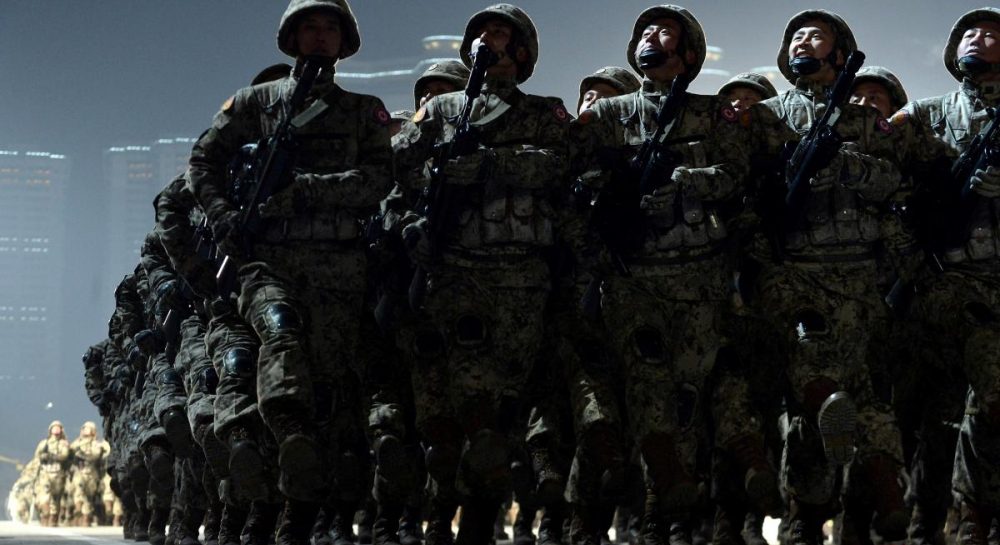
Photo: UNIAN
Key points
- Increased instances of security cooperation between Russia, China, Iran, and North Korea.
- Lack of a formal military alliance despite high levels of technology exchange.
- Difficulty in containing authoritarian regimes due to their joint resistance to sanctions.
A new geopolitical reality
The authoritarian regimes of Russia, China, Iran, and North Korea are increasingly acting in coordination, exchanging military technology, intelligence, and expertise. According to the FDD think tank, over 600 instances of security cooperation between these nations were recorded between 2019 and 2025, with the intensity of contacts rising significantly following the start of Russia's full-scale invasion of Ukraine.
Characteristics of the 'axis'
Despite strengthening ties, this alliance is not a NATO-style structure. The countries lack a unified command or binding legal commitments for mutual defense. Moreover, their national interests often conflict: for instance, China seeks economic stability, while Russia is interested in global instability to achieve its own objectives.
Experts emphasize that even without a formal alliance, the mutual support of these states significantly complicates the efforts of Western institutions. Attempts by the West to contain each of these countries individually are becoming less effective against the backdrop of their joint efforts to circumvent sanctions.
Source UNIAN — unian.ua/world/rosiya-knr-iran-ta-pivnichna-koreya-stvorili-neforma… ↗
Read next
 🛡️Security
Russian corvette reported hit by suspected drone attack in Libya
According to the Associated Press, the Russian military vessel 'Merkury' was damaged in the port of Benghazi due to a suspected maritime drone strike.
 🛡️Security
Russia tests NATO defense algorithms through airspace violations, says Dmytro Kashchenko
Experts point to systematic attempts by the Russian Federation to test the Alliance's reaction speed to threats near Ukraine's borders.
 🧠AI Analysis
Awakening of Ancient Bacteria in Permafrost: New Data on Climate Risks
Researchers from the University of Colorado have activated microorganisms that had been frozen for 40,000 years, revealing significant risks to the global climate.
 🎭Culture & Sport
Unique harvest: 350-kilogram pumpkin grown in Cherkasy region
A resident of Smila, Oleksiy Buryachenko, grew a 350-kilogram giant pumpkin on his plot and gave it away to the local community for free.
 🇺🇦Ukraine
US Director of National Intelligence: Putin is not a friend of America regarding Ukraine
US Intelligence Chief Jay Clayton clarified that diplomatic rhetoric regarding the Kremlin does not equate to a change in the strategic assessment of the war.
 🛡️Security
Aftermath of Russian attack on Dymer: death toll rises to eight
Rescue teams have recovered the body of the eighth victim following a Russian strike in Dymer, Kyiv region. Search and rescue operations at the site of the destroyed buil…