British students unearth 2,000-year-old Roman treasures: unique artifacts discovered
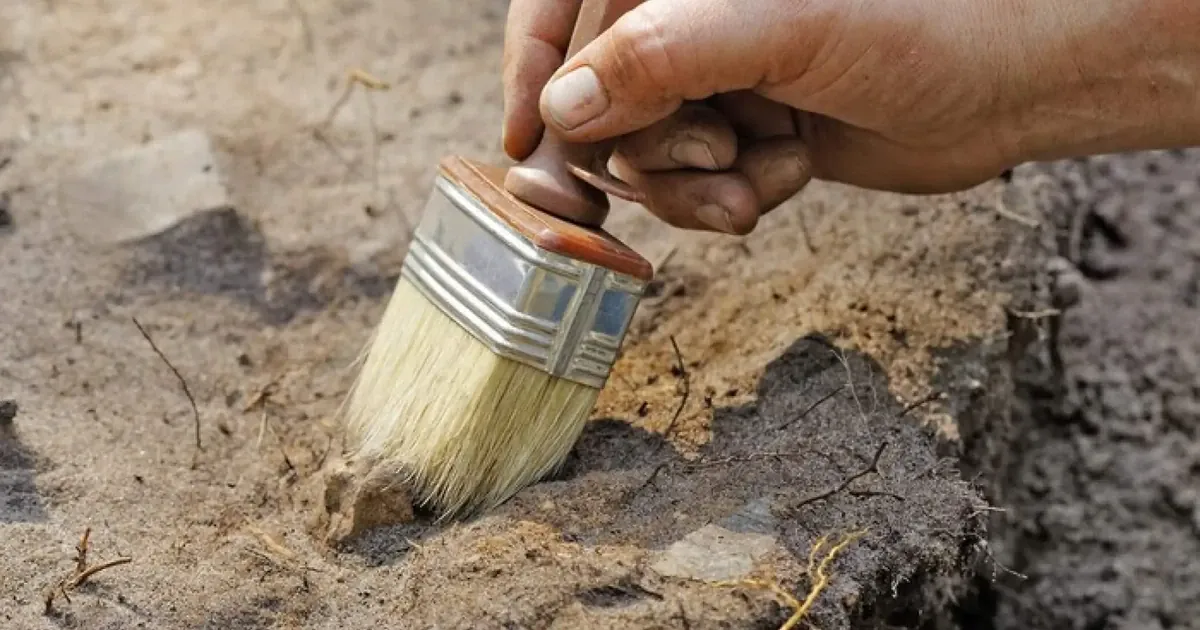
First-year students from Newcastle University discovered a collection of valuable Roman artifacts during excavations in northern England, including a preserved gold chain.
 🏙️City
Photo: TSN
Key points
- Newcastle University students find Roman artifacts in northern England
- Discoveries include a preserved gold chain and a gemstone depicting Jupiter
- Excavations took place near historic Hadrian's Wall
First-year students from Newcastle University stumbled upon a collection of valuable Roman-era artifacts during their very first archaeological excavations in Redesdale, northern England. The dig took place near the famous Hadrian's Wall, which once served as the northern frontier of Roman Britain. Although the university has been studying the site for over three decades, the latest discoveries surprised researchers due to their exceptional condition and historical significance.
Remarkable discoveries on day one
Right at the start of the fieldwork, student Elisa Zallu discovered a fragment of a gold chain measuring about 7 centimeters, crafted using the loop-in-loop technique typical of high-end Roman jewelry. Experts note that such pure gold chains were usually worn by high-ranking military officials and their families. On the same day, another participant, Shannon Wood, uncovered a folded piece of lead bearing traces of a Latin inscription, the exact meaning of which is still being investigated.
Over the following days, the students uncovered further remnants of material culture from the Roman period. Megan Potter found a gilded military mount, likely used as part of a belt or sword scabbard, while Maisie Whatmough and Zoe Yuill discovered a carnelian intaglio engraved with an image of Jupiter, the supreme Roman deity. In addition to personal ornaments and military gear, the team recovered coins, spearheads, clothing elements, and fragments of pottery bearing scratched graffiti.
Significance of the archaeological findings
Project leaders emphasize that the value of these artifacts lies not only in their antiquity and preservation quality, but in their ability to shed light on the lives of ordinary people at the frontier. Combined with the remains of buildings and production sites, these discoveries help researchers understand how the Roman border region functioned and how the imperial forces interacted with the local communities.
Source TSN — tsn.ua/tsikavinki/pershokursnytsi-rozkopaly-skarby-vikom-2000-rokiv-shc… ↗
Read next
 👥Society
Lviv region raises UAH 60 million for defenders and veteran rehabilitation
A charity auction in the Lviv region has successfully raised UAH 60 million to purchase drones and support the recovery of a wounded soldier.
 🏛️Politics
Russian Missiles Violate Polish Airspace: Incident Details
Russian missiles and a drone violated Polish airspace during strikes on Ukraine. Polish authorities describe the event as a deliberate provocation.
 🚨Events
Another Nighttime UAV Attack: Situation in Ukraine's Airspace
On the night of November 23, Russian forces launched a massive strike using attack drones from multiple directions.
 💡Tech
How to prepare windows for winter: the Scandinavian sealing method
Residents of Pryluky can insulate their homes using household items, minimizing heat loss without major renovations.
 💡Tech
Investigation into Polish incident: details of Russian missile origins revealed
Polish investigators have confirmed that three Russian-made Kh-101 cruise missiles breached the country's airspace. Experts have linked the hardware to a manufacturing pl…
 👥Society
Tragedy in Dymer: death toll from enemy strike rises to seven
Rescuers have recovered another body from the rubble of a residential building in Dymer. Search and rescue operations are ongoing.